

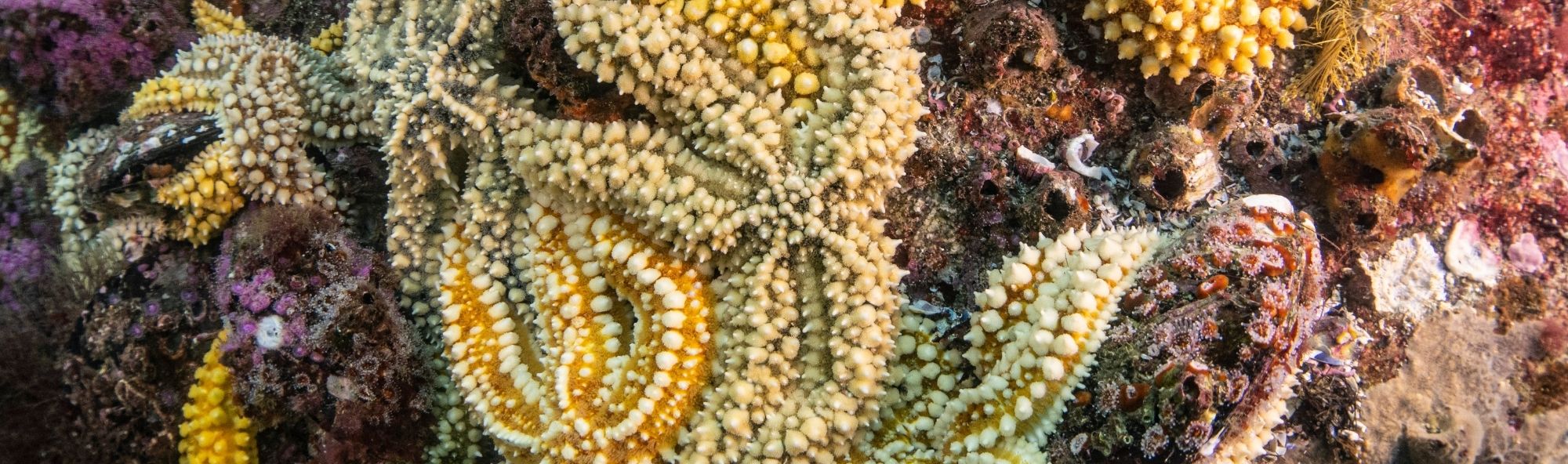

Biodiversity and Conservation for Ecosystem Resilience
Only a resilient ecosystem can cope with the broad diversity of threats it faces. Resilience, defined as the capacity of ecosystems to withstand permanent structural changes and maintain ecosystem functions, is being progressively eroded. The threat of global change, as well as overexploitation of resources, pollution, habitat loss, etc., underscores the urgent need to preserve and restore ecosystem resilience, which requires deeper knowledge of how ecosystems function.
The Institute's research in this line aims to achieve that deep understanding of ecosystem functioning. The ultimate goal is to increase ecosystem resilience by quantifying and valuing marine ecosystem services, especially those related to food production and biotechnology.
To do this, we investigate key life-history parameters from an ecological perspective (early stages, growth, reproduction, feeding, mortality, behavior) and analyze critical ecological interactions such as food webs or the carrying capacity of ecosystems. In addition, we study the spatio-temporal dynamics of organisms, populations, guilds and ecosystems, examining the role of habitat and biodiversity in ecosystem functions to provide advice on the development and evaluation of conservation measures, such as marine protected areas.
In addition, the impact of global change on ecosystems is a cross-cutting theme throughout all the research carried out within this line; research work that uses a wide variety of tools, methodologies and approaches, from field research to molecular ecology.