

- Since July, four other treatment plants have also been monitored.
- On average, the increase in the concentration of the virus’s genetic material at the inlet of the WWTPs precedes the detection of new infections by PCR by the health authorities by between 7 and 10 days. The latest data, from March, show concentrations of between 3,000 and 18,000 copies per litre, values considered by the researchers to be “moderate” compared with those obtained during January.
- CSIC participates through the IIM groups “Immunology and Genomics” and “Process Engineering”, and UVigo through “BiotecnIA Industrial Biotechnology and Environmental Engineering”.
Santiago de Compostela, 8 April 2021. Within the framework of the DIMCoVAR project, funded with more than 200,000 euros by the CRUE-Santander Supera Covid Fund, the Spanish National Research Council (CSIC), the University of Vigo (UVigo) and Geseco Aguas have spent a year analysing the presence of genetic material from the SARS-CoV-2 virus in wastewater entering 11 wastewater treatment plants (WWTPs) in Galicia, as well as at the discharge points of the WWTPs into the marine environment.
“We confirm that sampling at the selected treatment plants, distributed from north to south across Galicia, from Cedeira to Baiona, proved representative of the evolution of the pandemic in Galicia as a whole,” say Claudio Cameselle (BiotecnIA Industrial Biotechnology and Environmental Engineering group, UVigo) and Beatriz Novoa García (Immunology and Genomics group, IIM-CSIC).
The 11 WWTPs are Baiona, Nigrán, Gondomar, Cambados, Moraña, Porto do Son, Muros, Melide, Ares, Cedeira and Noia. In addition, since July and at the request of Augas de Galicia, Pobra do Caramiñal, Betanzos, Viveiro and Burela were added. “The average values from the 11 WWTPs faithfully reflect the evolution of the pandemic, and we can be sure that analysing the presence of the virus’s genetic material in wastewater is a good tool for detecting, sufficiently in advance, the evolution of the number of infected people in the community that discharges its water into the WWTP under study,” Cameselle explains. In this regard, the project members confirm that, on average, “the increase in the concentration of the virus’s genetic material at the WWTP inlet precedes the detection of new infections by PCR by the health authorities by between 7 and 10 days”.
“The data that we send every week to Augas de Galicia, and which they forward to the Galician Regional Ministry of Health and to the Ministry of Health, are useful for health authorities to detect possible outbreaks based on the upward trend in virus concentrations, as well as to manage health resources,” explains Cameselle. Together with the UVigo researchers, he is responsible for analysing the various physicochemical parameters of the samples collected by Geseco Aguas. CSIC’s participation, through the Institute of Marine Research and specifically the “Immunology and Genomics” and “Process Engineering” research groups, consists mainly of detecting the virus’s genetic material by PCR and developing the epidemiological model based on the analysis results.
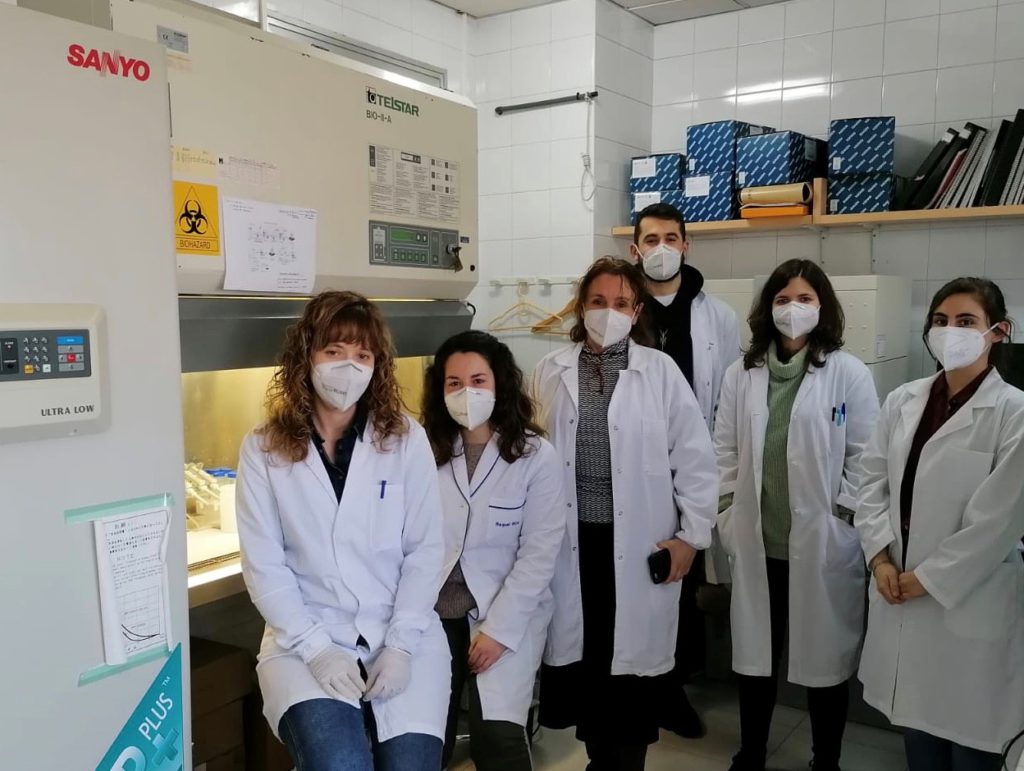
In “Immunology and Genomics”, Beatriz Novoa, Antonio Figueras and their entire team, especially Raquel Ríos, have devoted themselves since last year to achieving and optimising the best diagnostic techniques for detecting SARS-CoV-2 in wastewater. “We had been working for more than 30 years with enveloped animal viruses and RNA genomes, so it was easy for us to adapt our work to detecting coronavirus in wastewater,” explains Antonio Figueras. Beatriz Novoa, who coordinated the PCR work carried out at the IIM, adds: “We relied on our whole group to process the samples arriving at our laboratory several times a week, because at the beginning we had no staff dedicated to this task. Also, at the start of the pandemic we gave our RNA extraction robots to the Provincial Hospital of Pontevedra so PCRs could be performed, but we soon found protocols adapted to wastewater.” “We are now working on sequencing the viruses we detect, but this is quite difficult because the virus is broken and degraded in wastewater. Even so, we believe it is a good tool for identifying the mutations and variants of the virus circulating in Galicia,” the CSIC research professors explain.
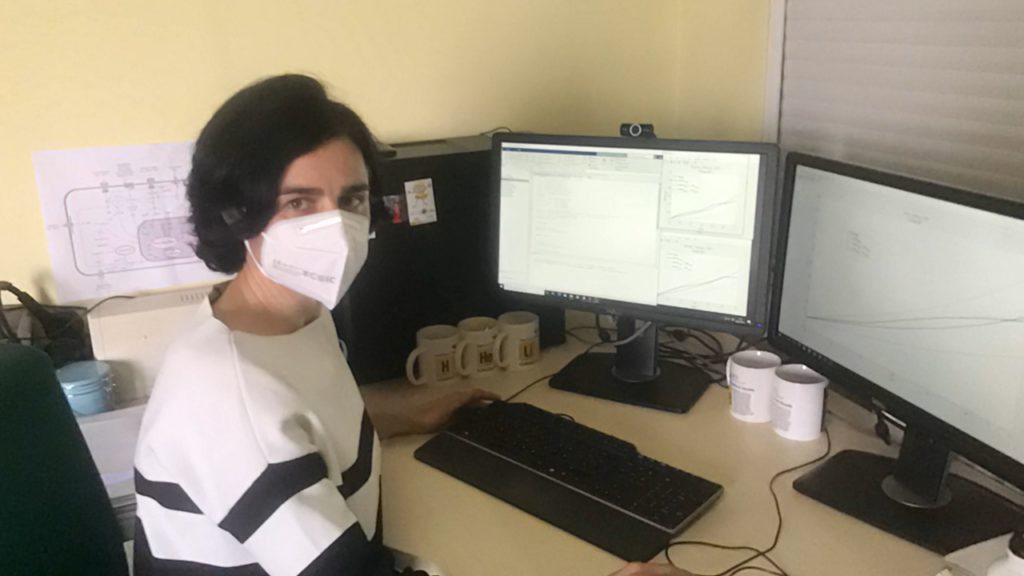
The participation of the “Process Engineering” group is coordinated by Irene Otero Muras and consists of mathematically processing the data by developing predictive mathematical models which, based on health data and data obtained from wastewater analyses, make it possible to understand the dynamics of the pandemic’s evolution and predict its evolution in the different localities.
The sampling process
The selection of the treatment plants being monitored was made to include different locations in Galicia with different population levels, between 4,000 and 20,000 inhabitants, and where there was no inflow of water from large hospitals, which would increase the presence of the virus.
“This provides detailed information free from external interference and allows a more precise study of outbreak dynamics,” the researchers explain. They also note that, when selecting the treatment plants, the existence of different types of water-treatment technology was taken into account in order to assess whether they had an effect on removing the virus’s genetic material.
It was found that treatment plants with biological treatment and tertiary disinfection treatment using ultraviolet light or sodium hypochlorite are more effective at removing the virus’s genetic material than plants without these kinds of treatments. “In any case, no viable viruses with infectious capacity were detected in the WWTPs or in the inlet or outlet effluents of the treatment plants. Wastewater and WWTPs are a good indicator of the evolution of the pandemic, but they are not a source of COVID-19 contagion,” clarify the DIMCoVAR researchers. The project will end on 31 May, but they are already seeking sources of funding to allow it to continue.
Towards a fourth wave of COVID-19? Latest data
The most recent analyses carried out at the end of March showed concentrations in the WWTPs under study of between 3,000 and 18,000 copies per litre, values considered “moderate” by the researchers compared with those obtained in January, during the worst moments of the third wave, when in some cases they exceeded one million copies per litre.
Nevertheless, although analyses of the presence of the virus’s genetic material in wastewater decreased during February, these values did not reach zero; instead, during March they remained in a range between 1,000 and 45,000 copies per litre. At present, the team says that it cannot state that there is an upward trend in the concentration of the virus’s genetic material at the inlet of the WWTPs, but neither is there a decrease in concentration that would confirm a reduction in the incidence of the pandemic. “In other words, the concentration of genetic material in wastewater indicates that the virus is still circulating, and if we become careless and relax safety measures even slightly, there may be a new increase in cases similar to that observed in December 2020 and January 2021,” they explain.
Regarding the possibility that we are now facing a fourth wave, they state that “it depends not so much on the concentration values themselves as on the trend over time, so although at this moment it cannot be categorically stated that there is an increase in virus concentration in the WWTPs, nor that we are at the beginning of a fourth wave, there are nevertheless concentration values high enough to state that the virus is still circulating and that the emergence of a new wave is a real risk, similar to what happened in December 2020,” they warn.
More information
CSIC: Ana Bellón Rodríguez (981 55 27 88, 696 926 189)
UVigo: Mª del Carmen Echevarría Figueroa (986 81 36 04)